Batnights

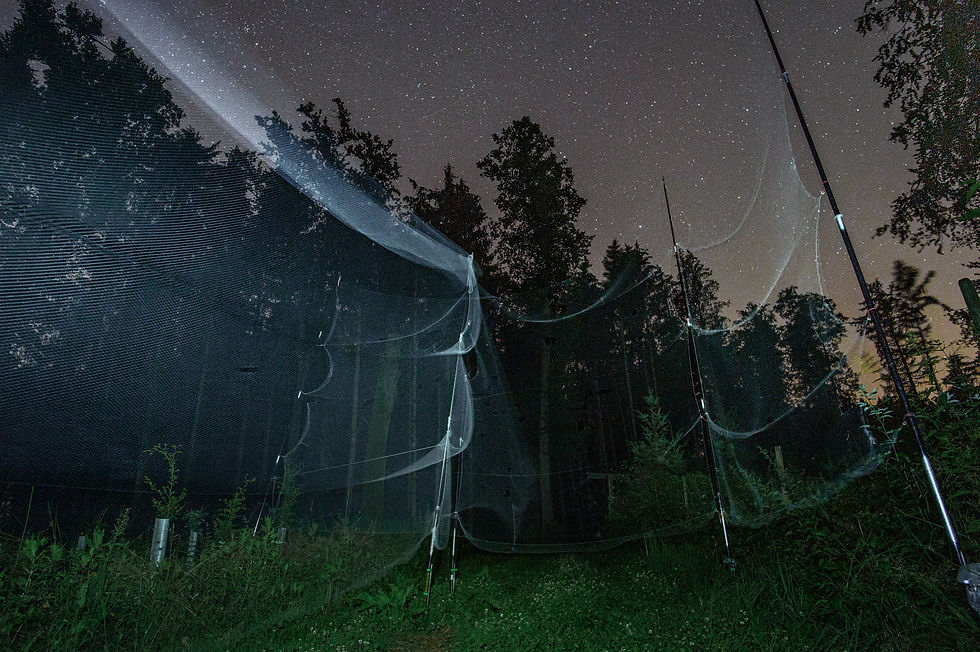
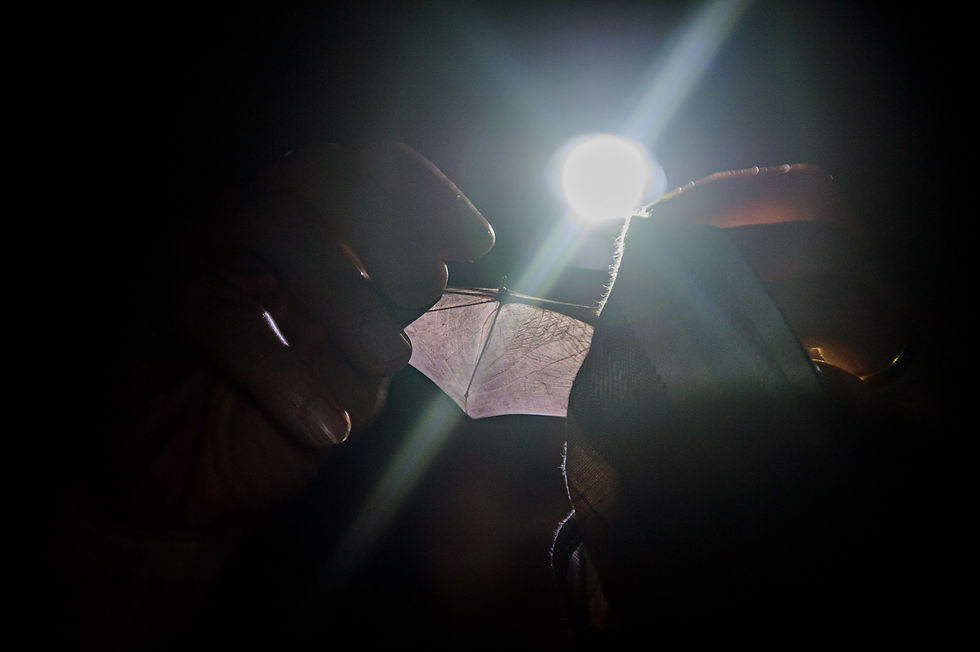
I was allowed to join the bat specialist Dr. Doris Gohle during her work. I joined her to learn a lot about bats and also document her exciting work. During summertime she often catches bat females for telemetry. Telemetry is a key method for locating bat maternity colonies and mapping their roost networks. To do this, bats are first captured using mist nets or at their emergence, identified to species level, and preferably females are selected during the maternity period (approximately late May to July). Suitable mini-transmitters, which generally do not exceed about 5% of the bat’s body mass, are attached to the animal’s back with medical skin glue and usually fall off on their own after a few days to a few weeks. The tagged bats are then tracked over several nights using receivers and handheld antennas, in order to follow their flight paths and identify their day roosts, thus locating maternity roosts in buildings or tree cavities. In this way, previously unknown roosts can be discovered, their locations precisely mapped, and important structural characteristics such as roost type, tree species, and surrounding habitat recorded. Telemetry also provides valuable information on roost networks, roost switching, and short-term emergency roosts, all of which are crucial for assessing and protecting bat colonies. Despite the considerable time and logistical effort involved, telemetry is therefore of particular importance for conservation assessments, planning processes, and the targeted protection of bat maternity colonies. The highlight was the discovery of the most northern Bavarian maternity colony of the Lesser horseshoe bat (Rhinolophus hipposideros).